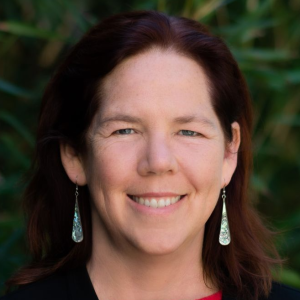
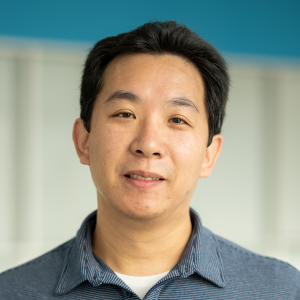
• Single-cell Multi-sample Multi-condition Data Integration to Uncover Disease Signatures

    Harvard TH Chan School of Public Health, FXB G13 677 Huntington Ave, Boston, MA, United States

    HSPH Biostatistics and DFCI Data Science Colloquium Thursday February 27th at 4pm HSPH FXB Room G13 Yingxin Lin, PhD Postdoctoral Associate in the Department of Biostatistics at the Yale School of Public Health The recent emergence of multi-sample multi-condition single-cell multi cohort studies allows researchers to investigate different cell states. The effective integration of multiple […]

  • How Do Neural Networks Learn Features From Data?

    Harvard TH Chan School of Public Health 677 Huntington Ave, Boston, MA

    HSPH Biostatistics and DFCI Data Science Colloquium Monday March 3rd at 4:00pm HSPH Kresge G2 Adityanarayanan Radhakrishnan Eric and Wendy Schmidt Center Postdoctoral Fellow, Broad Institute of MIT and Harvard, Harvard School of Engineering and Applied Sciences Abstract: Understanding how neural networks learn features, or relevant patterns in data, is key to accelerating scientific discovery. […]

  • Universal Prediction of Cell-cycle Position Using Transfer Learning

    Harvard TH Chan School of Public Health, FXB G13 677 Huntington Ave, Boston, MA, United States

    HSPH Biostatistics and DFCI Data Science Colloquium Thursday, March 6, 2025 4:00pm Harvard TH Chan School of Public Health, FXB G13 Kasper Hansen, PhD Associate Professor, McKusick-Nathans Insitute of Genetic Medicine, Department of Biostatistics, Johns Hopkins University A significant barrier to progress in biomedical data science is the development of prediction models that work across contexts such […]
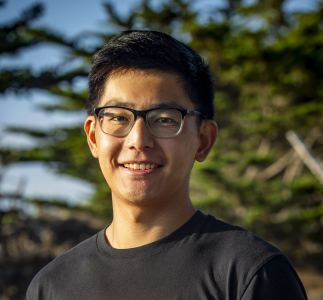
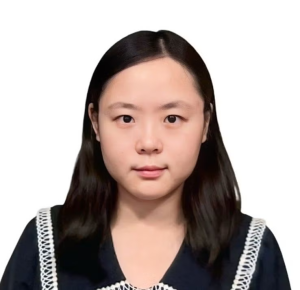
  • Decoding Aging at Spatial and Single-cell Resolution with Machine Learning

    Harvard TH Chan School of Public Health 677 Huntington Ave, Boston, MA

    HSPH Biostatistics and DFCI Data Science Colloquium Monday March 10th at 4:00pm HSPH Kresge G2 Eric Sun PhD Candidate, Department of Biomedical Informatics Stanford University Aging is a highly complex process and the greatest risk factor for many chronic diseases including cardiovascular disease, dementia, stroke, diabetes, and cancer. Recent spatial and single-cell omics technologies have […]

  • Dissecting Tumor Transcriptional Heterogeneity from Single-cell RNA-seq Data by Generalized Binary Covariance Decomposition

    Harvard TH Chan School of Public Health 677 Huntington Ave, Boston, MA

    HSPH Biostatistics and DFCI Data Science Colloquium Tuesday March 11th at 4:00pm HSPH FXB G12 Yusha Liu, PhD Research Assistant Professor Department of Biostatistics The University of North Carolina at Chapel Hill Profiling tumors with single-cell RNA sequencing has the potential to identify recurrent patterns of transcription variation related to cancer progression, and to produce […]

  • Data Integration in Spatial and Single Cell Omics: What is Erased, and Can you Recover it?

    Harvard TH Chan School of Public Health 677 Huntington Ave, Boston, MA

    HSPH Biostatistics and DFCI Data Science Colloquium Thursday, March 27, 2025 4:00pm Harvard TH Chan School of Public Health, FXB G13 Nancy Zhang, PhD Ge Li and Ning Zhao Professor, Professor of Statistics and Data Science, Vice Dean of Wharton Doctoral Programs,  The Wharton School, University of Pennsylvania In single-cell and spatial biology, data integration refers […]

  • Fréchet Regression of Random Objects on Vector Covariates and Its Applications for Single Cell RNA-seq Data Analysis

    Harvard TH Chan School of Public Health 677 Huntington Ave, Boston, MA

    HSPH Biostatistics and DFCI Data Science Colloquium Thursday, April 3, 2025 4:00pm Harvard TH Chan School of Public Health, FXB G13 Hongzhe Li, PhD Perelman Professor of Biostatistics, Epidemiology and Informatics Director, Center for Statistics in Big Data Vice Chair for Research Integration, Department of Biostatistics, Epidemiology and Informatics, University of Pennsylvania Population-level single-cell RNA-seq […]

  • Modeling Multiscale Genome and Cellular Organization

    HSPH Biostatistics and DFCI Data Science Seminar Tuesday April 15 at 4:00pm Dana-Farber Cancer Institute Center for Life Sciences Building, 11th Floor, Room 11081 Jian Ma, PhD Ray and Stephanie Lane Professor of Computational Biology Carnegie Mellon University   The intersection of Al/ML and biomedicine is entering a transformative era, with growing potential to impact […]

  • Complex Disease Modeling And Efficient Drug Discovery With Large Language Models

    HSPH Biostatistics and DFCI Data Science Seminar Tuesday April 29 from 11:00-12:00pm Zoom only (Link to be posted shortly) Yu Li, PhD Assistant Professor, CSE The Chinese University of Hong Kong Large language models, which can integrate and process large amounts of data in biomedicine, have great potential in modeling complex diseases and discovering functional […]

  • Preference Inference for Language Models Debiased by Fisher Random Walk Models

    Harvard TH Chan School of Public Health 677 Huntington Ave, Boston, MA

    HSPH Biostatistics & DFCI Data Science Colloquium Series September 11 at 4:00PM Harvard TH Chan School of Public Health, FXB-301 Junwei Lu, PhD Associate Professor of Biostatistics, Harvard TH Chan School of Public Health Human preference alignment has been shown to be effective in training the large language models (LMs). It allows the LLM to […]

  • Reproducible Research – Tools and a case study with NHANES

    Harvard TH Chan School of Public Health 677 Huntington Ave, Boston, MA

    HSPH Biostatistics & DFCI Data Science Colloquium Series September 18, 2025 4:00 PM HSPH FXB-301 Robert Gentleman, PhD Principal Research Scientist Harvard T.H. Chan School of Public Health and Dana-Farber Cancer Institute I will discuss how new technologies and statistical methodologies can help enhance our ability to perform reproducible research. I will demonstrate how these […]

  • Navigate the Crossroad of Statistics, Generative AI and Genomic Health

    HSPH Biostatistics & DFCI Data Science Colloquium Series Thursday October 2, 2025 4:00pm ET HSPH FXB-301 Xihong Lin, PhD, Department of Biostatistics and Department of Statistics, Harvard University Integrating statistics with generative Al provides unprecedent opportunities to empower statistical science and accelerate trustworthy scientific discovery by leveraging the potential of generative Al models alongside rigorous […]

  • Flexible Adaptive Procedures for Testing Multiple Treatments, Endpoints or Populations in Confirmatory Clinical Trials

    HSPH Biostatistics & DFCI Data Science Colloquium Series Thursday October 9, 2025 4:00pm ET HSPH FXB-301 Cyrus Mehta, President and Co-Founder of Cytel, Inc, Adjunct Professor, Department of Biostatistics, Harvard TH Chan School of Public Health The statistical methodology for the classical two-arm group sequential design has advanced vastly over the past three decades to […]

  • The Single Arm Changing to Randomized Design (SACRED)

    HSPH Biostatistics & DFCI Data Science Colloquium Seminar Series Harvard TH Chan School of Public Health, FXB 301 November 21st, 4:00-5:00pm Glen Laird, Head of Biostatistics, Methodology and Innovation, Vertex Pharmaceuticals

  • Stay tuned for 2026 events!

    Please watch our Events page for the schedule of seminars and workshops starting in February 2026!

  • Spectral Methods for Spatial and Multi-omics data

    HSPH Biostatistics and DFCI Data Science Colloquium Thursday February 26 at 4:00pm HSPH, FXB 301 Phillip Nicol, PhD Student, Harvard TH Chan School of Public Health https://hsph.harvard.edu/department/biostatistics/seminars-events/colloquium-seminar-series/

  • Integrating Pre-Trained Language Models into Topic Modeling

    HSPH Biostatistics and DFCI Data Science Colloquium Thursday March 5 at 4:00pm HSPH, FXB 301 Tracy Ke, PhD, Associate Professor of Statistics, Harvard University https://hsph.harvard.edu/department/biostatistics/seminars-events/colloquium-seminar-series/

  • Inference of Tissue Architecture across Space, Time, and Modality

    HSPH Biostatistics and DFCI Data Science Colloquium Thursday March 12 at 4:00pm HSPH, FXB 301 Benjamin Raphael, PhD, Professor of Computer Science at Princeton University https://hsph.harvard.edu/department/biostatistics/seminars-events/colloquium-seminar-series/

  • An Example to Illustrate Randomized Trial Estimands and Estimators

    HSPH Biostatistics and DFCI Data Science Colloquium Thursday March 26 at 4:00pm HSPH, FXB 301 Linda Harrison, PhD, Research Scientist, Department of Biostatistics, Harvard T.H. Chan School of Public Health https://hsph.harvard.edu/department/biostatistics/seminars-events/colloquium-seminar-series/

  • An Alternative Estimator to the Cox Hazard Ratio

    Data Science Seminar Friday, March 27, 1:00 PM ET Center for Life Sciences Building, 11th floor, room 11081 Also will be streamed on Zoom Stella Karuri, PhD Consulting Statistician Zoom link: https://bit.ly/DSSeminarMar27

  • DoubleGen: Debiased Generative Modeling of Counterfactuals

    HSPH Biostatistics and DFCI Data Science Colloquium Thursday April 2 at 4:00pm HSPH, FXB 301 Alex Luedtke, PhD, Professor of Health Care Policy, Harvard Medical School https://hsph.harvard.edu/department/biostatistics/seminars-events/colloquium-seminar-series/

  • Factor Analysis and Questions of Causation

    HSPH Biostatistics and DFCI Data Science Colloquium Thursday April 9 at 4:00pm HSPH, FXB 301 Tyler VanderWeele, PhD, John L. Loeb And Frances Lehman Loeb, Professor of Epidemiology, Faculty Affiliate - Department of Biostatistics, Harvard T.H. Chan School of Public Health Factor analysis is often employed to evaluate the extent to which a single factor […]

  • When Large p Is a Blessing

    HSPH Biostatistics and DFCI Data Science Colloquium Thursday April 9 at 4:00pm HSPH, FXB 301 Zhijin Wu, PhD, Professor of Biostatistics, Brown University Biomedical research has benefited tremendously from the breakthroughs in biotechnology in the last two decades that enabled simultaneous quantifications of a large number of biomolecules (DNA/RNA/proteins). Such data collected at the -omics […]